

Figuring out how to manage jet lag during business travel almost wrecked my first international client pitch. I landed in Tokyo at 7 AM, walked into a boardroom at 9, and completely blanked on our proposal numbers. My brain was still somewhere over the Pacific. After years of taking 15+ international trips a year, I finally built a routine that keeps me functional in almost any time zone. These are the habits that saved me on the road.
1. Start Shifting Your Schedule Three Days Early
Most people wait until they land to deal with jet lag. By then, you’re already behind. Three days before I leave, I start moving my sleep and wake times by 30 to 45 minutes a day toward the destination time zone. It doesn’t sound like much, but it helps more than you’d think.
If I’m flying east, I go to bed earlier and get up earlier. If I’m headed west, I do the opposite. I move my meal times too. The app Timeshifter is actually useful for this because it builds a plan around your flight details and sleep habits. By the time I get on the plane, my body has already started catching up.
2. Pick Your Flights Strategically
Flight timing matters a lot more than most business travelers think. If I’m flying east, like New York to London, I book an overnight flight that lands in the morning. If I’m going west, I prefer a daytime departure so I arrive in the evening and can go to sleep at a normal local hour.
I also try to avoid connections that throw off the timing. A layover in the wrong place can mess with the whole plan. Direct flights cost more, sure, but being able to think clearly when you land is usually worth it. If your company’s travel policy pushes back, call it what it is. A productivity expense.
3. Control Light Exposure Like a Pro
Light is the strongest tool you have for resetting your body clock, and most people accidentally use it the wrong way. After you land, you need bright light at the right times and darkness at the right times. Get that backward and jet lag can drag on longer.
Also Read: Top Hotels for Business Travelers Near Airports 2026
When I land east of home, I go after morning sunlight. I’ll walk outside, grab coffee somewhere nearby, whatever gets me into natural light before noon. If I’ve flown west, I try to get more afternoon and evening light instead. At night, I put on blue-light-blocking glasses about two hours before the bedtime I’m aiming for. I know they look a little goofy in a hotel lobby. I still wear them because they help.
When to Avoid Light Entirely
If you’ve crossed more than eight time zones, things get a little trickier. Morning light can sometimes shift your clock the wrong way. A good rule of thumb is this: if you flew east across 9+ zones, avoid bright light for the first few hours after waking, then get light later in the morning. Timeshifter and the Jet Lag Rooster website can map that out for you.
4. Use Melatonin the Right Way
Melatonin is not a sleeping pill. I’ve watched coworkers take 10mg and expect to be out cold for eight hours. That’s not really how it works. Melatonin tells your brain it’s nighttime. The timing matters more than the size of the dose.
I usually take 0.5mg to 1mg about 30 minutes before my target bedtime in the new time zone. That’s enough for me. Anything higher tends to leave me foggy the next morning, which is the last thing I want before a 9 AM meeting. I prefer sublingual tablets because they kick in faster. If melatonin doesn’t sit well with you, tart cherry juice concentrate can be a decent alternative since it naturally contains a small amount.
How to Manage Jet Lag During Business Travel with Smart Hydration
This one sounds dull, and for years I ignored it. Big mistake. Dehydration makes every part of jet lag worse. The fatigue feels heavier. The brain fog gets thicker. Headaches show up faster. Airplane cabins are dry enough to make all of that worse.
I drink at least 16 ounces of water for every two hours of flight time. I bring an empty Hydro Flask through security and fill it at the gate. I skip alcohol on eastbound flights because it wrecks sleep and dries you out even more. One glass of wine on a transatlantic red-eye can easily cost you a decent chunk of rest. I learned that one before a presentation in Frankfurt, and I do not recommend repeating it.
6. Nap with a Purpose, Not by Accident
The urge to collapse for four hours after landing is very real. I’ve done it more than once. Every time, it wrecked my sleep that night, and then the next day was even worse.
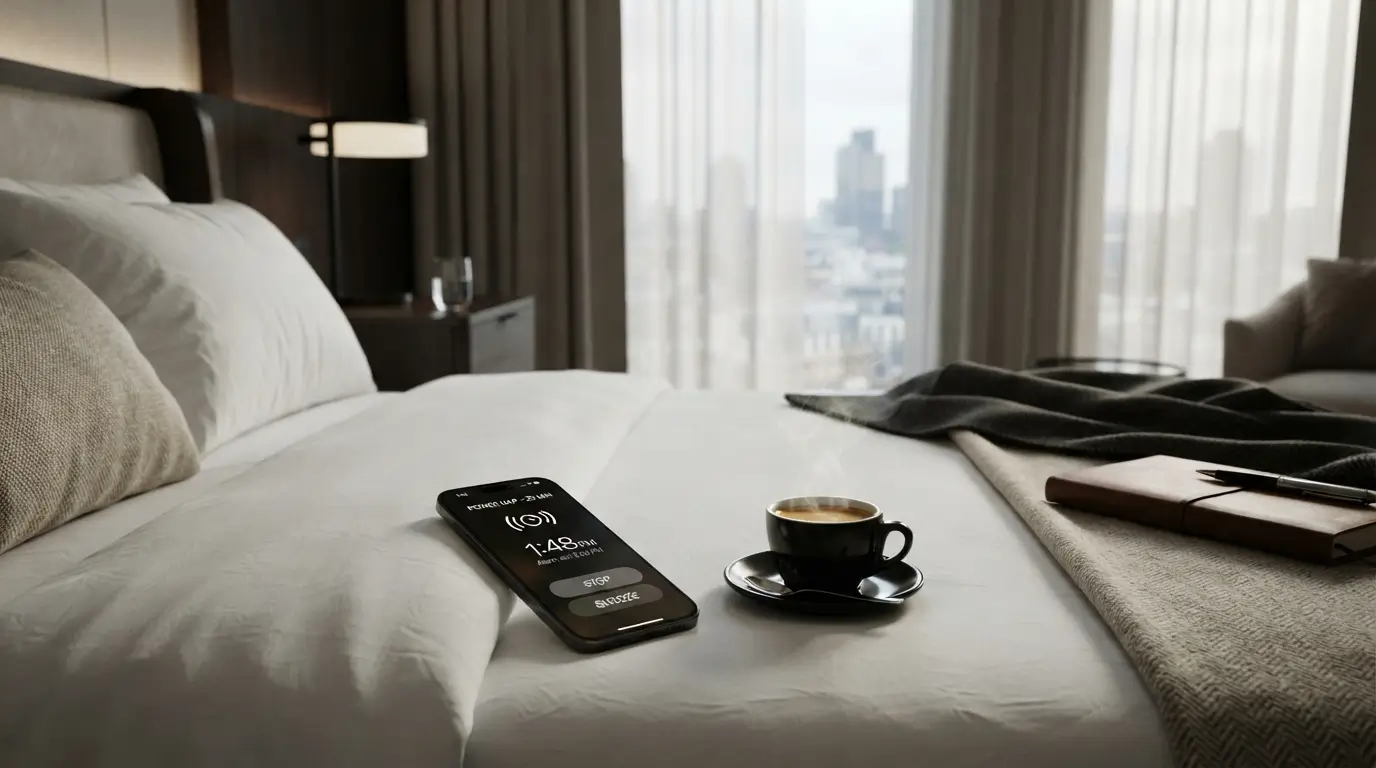
Now I stick to one tactical nap. 20 to 25 minutes, max, and only before 2 PM local time. I set two alarms because hotel beds after a long flight are dangerous. A short nap takes the edge off without wrecking the night ahead. If I’m really dragging, I’ll drink a cup of coffee right before I lie down. The caffeine starts working about 20 minutes later, right when the alarm goes off, so I wake up sharper. Sleep researchers call it a coffee nap. It sounds odd. It works.
7. Time Your Meals to the New Zone Immediately
Your gut keeps time too. Meal timing tells your body what hour it is almost as much as light does. As soon as I board, I set my watch to the destination time and eat based on that, even if it means skipping the in-flight dinner because it’s basically 3 AM where I’m headed.
Once I land, I eat on local time whether I feel like it or not. Breakfast at breakfast time. Lunch at lunch time. Dinner at dinner time. The first day always feels a little off. By day two, my appetite usually catches up. I also tend to go heavier on protein during the day and save carbs for the evening since they make me sleepy. A bowl of pasta around 8 PM local time has become my usual first-night reset.
8. Exercise at the Right Time After Landing
Working out after a long flight sounds miserable when you’re tired and cramped. I know. Still, 20 to 30 minutes of moderate movement within a few hours of landing can help your body get the message that it’s daytime.
I keep it basic. A brisk walk near the hotel. A short session in the gym. Sometimes just a few bodyweight exercises in the room. Timing matters more than intensity. I try to move during daylight hours in the destination city. Morning or early afternoon usually works best after eastbound travel.
Also Read: Business Travel Packing Tips for Short Trips 2026
Late afternoon tends to feel better when heading west. I stay away from hard workouts within three hours of bed because they make it tougher to fall asleep. A yoga stretch session is the one exception. That usually helps.

9. Build Buffer Time into Your Schedule
This is the advice that asks for a little honesty. You are probably not going to do your best work on day one after crossing six or more time zones. That’s just reality. Pretending otherwise is how people miss details and make bad calls.
Whenever I can, I arrive a full day before the first important meeting. That extra day gives me time to adjust, move a little, eat on schedule, and get one full night’s sleep on local time. I’ve explained this to skeptical managers in simple terms. One more hotel night is cheaper than a bad client presentation. If I truly can’t get a buffer day, I try to push key meetings into the afternoon instead of first thing in the morning. I almost always perform better then on arrival day.
Frequently Asked Questions
How long does jet lag typically last for business travelers?
Most people need about one day of recovery for each time zone crossed. A flight from New York to London, for example, can leave you feeling off for 3 to 5 days. When I use the strategies above, I usually feel around 80% normal by day two and mostly back to myself by day three. Eastbound trips usually hit harder than westbound ones.
Does jet lag affect job performance during business travel?
Yes, very much. Reaction time, decision-making, and memory all take a hit when you’re jet-lagged. I’ve made sloppy mistakes on contracts and forgotten key talking points in meetings when I didn’t handle it well. It’s not just about feeling sleepy. It shows up in your work.
Are sleeping pills a good option for managing jet lag?
I’d be careful with them. Prescription sleep aids like Ambien may help you sleep on the plane, but they don’t actually reset your body clock. You can wake up having slept without feeling adjusted. I’ve also heard enough stories from coworkers about grogginess and fuzzy memory the next morning to keep my distance. For most people, short-term low-dose melatonin is the better first step.
What’s the best seat on the plane for reducing jet lag?
A window seat is my first choice because it gives you more control over light and a place to lean when you’re trying to sleep. I always pick one on red-eye flights. If business or first class is in budget, lie-flat seats do help because real horizontal sleep is different from dozing upright. In economy, a neck pillow and an eye mask help more than people think.
Can frequent business travel make jet lag worse over time?
It can. Constantly bouncing across time zones can wear you down, and long-term circadian disruption has been linked to health problems, including weaker immune function. I’ve noticed my body takes longer to adjust now than it did at 25. Recovery time between trips and steady sleep habits at home make a real difference.
Conclusion
Managing jet lag on business trips is less about one trick and more about having a solid routine before, during, and after the flight. I still get jet-lagged sometimes. I just don’t let it run the trip anymore. What’s your go-to move for functioning after a long flight?